
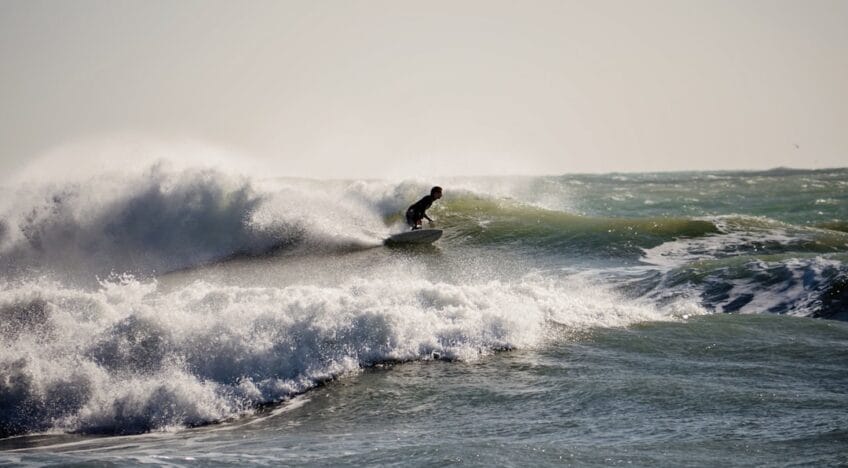
Learning how to surf on a shortboard
by adm.artemisclick- Uncategorized
- 20 maio
Learning how to surf on a shortboard is one of the most rewarding challenges you can take on during a sports travel experience, especially when combined with other training like Brazilian Jiu-Jitsu. If you’ve ever dreamed of mastering the waves while improving your fitness and meeting like-minded travelers, Florianópolis offers the perfect setting to make it happen. The island’s consistent swells, warm waters, and professional instructors create an ideal environment for beginners and intermediate surfers to progress quickly on a shortboard—the most versatile and responsive board type once you get the fundamentals down.
What makes learning how to surf on a shortboard even more immersive is pairing it with structured training and proper accommodation in a single package. Instead of juggling different bookings and rushing between lessons, you can dedicate yourself fully to your progression, with your days split between water time and recovery. This integrated approach—combining daily surf instruction, quality coaching, and a supportive community—accelerates your learning curve while letting you experience authentic Brazilian coastal lifestyle.
Whether you’re a complete beginner or looking to refine your shortboard technique, a dedicated sports tourism program transforms the learning process from a vacation activity into a genuine skill-building journey.
Can Beginners Learn to Surf on a Shortboard?
The short answer is yes—though it comes with important considerations. Beginners can absolutely learn to surf on a shortboard, but it demands greater commitment, consistency, and quality instruction compared to starting on a longer board. The challenge isn’t insurmountable; rather, it’s about understanding what lies ahead and maintaining realistic expectations about your progression timeline.
Many aspiring surfers gravitate toward shortboards after seeing them in the water, assuming that’s the natural starting point. The truth is more complex. These boards demand superior balance, stronger paddling capacity, and more refined technique than most beginners possess initially. That said, with dedicated practice and professional guidance—such as what you’d receive in a structured learn how to surf program—steady advancement is entirely achievable.
Why Shortboards Are Challenging for Beginners
Shortboards present inherent difficulties for novices because they sacrifice flotation and stability for performance. Measuring typically between 5’6″ and 6’0″ with narrower proportions and reduced volume, these boards excel at responsiveness and maneuverability—ideal for experienced riders but unforgiving for those still mastering fundamentals.
The compact surface area limits wave-catching opportunities. You’ll need robust paddling muscles to generate sufficient speed and match wave velocity. Weight distribution becomes critical; even minor imbalances cause the board to slip away. The narrower design also makes the pop-up—transitioning from horizontal to standing position—technically demanding, as foot placement allows minimal margin for error.
Beyond mechanics, shortboards require stronger wave-reading abilities. You must identify the optimal takeoff point, position yourself precisely, and time your pop-up with accuracy. Beginners typically lack these spatial awareness skills, making shortboards feel deceptively difficult.
The Reality: 90 Days of Progression and Patience
Most beginners tackling a shortboard should anticipate a 90-day minimum before achieving comfort and consistency. This assumes regular sessions—ideally three to five weekly in reasonable conditions. Some accelerate faster; others require additional time. Natural athleticism, previous board sports experience, local conditions, and instruction caliber all influence your trajectory.
Your first month emphasizes paddle conditioning and fundamental pop-up mechanics. You’ll invest considerable time simply building strength and learning how your body responds on the board. Numerous wipeouts and frustrating moments are inevitable.
Weeks four through eight represent the consistency phase. You’ll successfully catch more waves, extend your rides, and begin recognizing wave patterns. Paddling power noticeably improves, and the pop-up transitions from mechanical to intuitive.
By the 90-day mark, you should be catching waves regularly, maintaining basic control, and grasping fundamental turning mechanics. You won’t be advanced, but you’ll have crossed from complete novice to someone who genuinely surfs.
Shortboard vs Longboard: Which Should You Choose?
Deciding between a shortboard and longboard fundamentally shapes your learning journey. While this guide emphasizes shortboard development, comparing both options helps you make an informed choice aligned with your objectives and available timeframe.
Key Differences in Learning Curve
Longboards—typically eight to nine feet—offer substantial advantages for newcomers. Superior flotation simplifies paddle-outs and makes wave-catching more forgiving. The expansive platform delivers greater stability and forgiveness during pop-ups. Most beginners progress faster on longboards because they encounter fewer technical obstacles and can concentrate on understanding wave dynamics rather than battling the equipment.
Shortboards demand more immediately. The learning curve steepens considerably, though it’s not insurmountable. The payoff: once you’ve mastered a shortboard, transitioning to other boards becomes significantly easier. You’ve built stronger foundational skills.
The paddle-out distinction matters substantially. Longboards handle breaking waves relatively easily during paddle-outs. Shortboards require duck-diving—rolling beneath incoming waves—or getting pushed backward repeatedly. This demands considerable energy and creates frustration for beginners lacking necessary strength.
Wave-catching reveals the most dramatic difference. Longboards catch waves under nearly any circumstance with minimal effort. Shortboards demand precise positioning, optimal paddling timing, and sufficient speed. Beginners frequently miss catchable waves, leading to extended sessions of discouragement.
When to Transition from Longboard to Shortboard
If you begin on a longboard, transition once you consistently catch waves, perform smooth pop-ups, and execute basic turns. This typically requires four to eight weeks of regular practice. The true indicator isn’t elapsed time but demonstrated ability: you should feel assured and controlled on your longer board before downsizing.
An intermediate step—a mid-length board spanning 6’6″ to 7’6″—benefits many surfers. This transitional option bridges the gap between longboard stability and shortboard responsiveness, enabling you to develop shortboard-specific skills without the full difficulty jump.
Transition naturally. If your longboard feels boring and you crave greater challenge, or if smaller waves make your longer board sluggish, it’s time to size down. Conversely, if fundamental skills remain shaky, extending your time on a longer board isn’t failure—it’s intelligent progression.
How to Size Down: Choosing the Right Shortboard
Selecting your inaugural shortboard proves critical. Incorrect sizing reinforces poor habits or creates unnecessary obstacles. The proper dimensions accelerate improvement and foster confidence.
Shortboard Dimensions for Beginners
For beginners transitioning from a longboard or starting directly on a shortboard, target the 5’8″ to 6’2″ range. This span balances maneuverability with adequate flotation for wave-catching without demanding elite paddling strength.
Length tells only part of the story. Width and thickness matter equally. A beginner-friendly shortboard should measure 19″ to 20″ wide and 2.25″ to 2.5″ thick, providing stability while preserving responsive handling.
The outline—the shape viewed from above—should feature a slightly fuller middle and rounded edges. This geometry forgives pop-up errors and provides better control during turns. Steer clear of aggressive tapers or overly narrow waists; these suit advanced surfers capable of exploiting that responsiveness.
Rocker—the nose-to-tail curve—should remain moderate. Excessive rocker complicates paddling; insufficient rocker limits maneuverability. Beginners benefit most from balanced rocker.
Volume and Float: What Matters Most
Volume—expressed in liters—represents the single most critical specification for beginners. It directly controls paddling ease and wave-catching success. Use this calculation: bodyweight in pounds multiplied by 0.35 to 0.45 equals your ideal volume in liters.
A 180-pound beginner should target 21-27 liters. Within this range, select higher volume if you’re less athletic or lack water sports background. Choose lower volume if you’re naturally strong or have prior board sports experience.
Don’t minimize volume importance. A “normal-looking” shortboard might prove impossible if it lacks sufficient float. Many beginners select boards that are too thin or narrow, then blame themselves for struggling when the board itself is the actual limitation.
Float directly influences paddling efficiency. Greater volume keeps you higher in the water, requiring less energy for speed generation. Less volume causes you to sink deeper, creating additional resistance. For beginners still developing paddle fitness, extra volume proves invaluable.
Board composition affects effective float. Foam core boards offer superior forgiveness and durability compared to fiberglass alternatives. For your first shortboard, a quality foam core option represents the smarter choice—it’ll withstand the inevitable dings and collisions accompanying the learning process.
Essential Tips for Learning to Surf on a Shortboard
Technical advancement on a shortboard demands focused attention to specific mechanics. These strategies address frequent beginner challenges and expedite improvement.
Paddle Power and Positioning
Paddling efficiency determines your wave-catching success. Most beginners paddle inefficiently, relying excessively on arm strength rather than engaging core and back muscles. Effective paddling mobilizes your entire body: arms pull, shoulders rotate, and core stabilizes.
Hand entry should be clean—fingers together, hand flat, entering at shoulder width. Pull water toward your hips in smooth, continuous strokes. Rotate shoulders to generate power from your torso rather than arms alone. This approach builds sustainable strength and reduces fatigue.
Board positioning proves enormously important. Lie centered with weight distributed evenly. Your chest should sit slightly forward of center to keep the nose elevated. Positioning too far back creates sluggishness; too far forward causes the nose to submerge.
As you approach a wave, position yourself so paddling directs you toward the peak. Timing proves crucial—begin paddling as the wave starts lifting you, not after you’ve entered the critical zone.
Pop-Up Technique on Shorter Boards
The pop-up—transitioning from prone to standing—challenges many beginners on shortboards. While mechanics mirror those on longer boards, the smaller platform demands greater precision.
Position hands beside your chest with spread fingers for stability. Hands should align roughly with your ribs—neither too forward nor too far back. As the wave lifts the board, explosively push with your arms while driving knees toward your chest, generating standing momentum.
Feet should land centered on the board, roughly hip-width apart. Your rear foot lands near the tail (though not on it), while your front foot positions closer to center. Avoid landing with feet too close or too far apart—both compromise balance.
Execute the pop-up as one fluid motion, not a pause-and-stand sequence. Practice on the beach first, repeatedly performing pop-ups while lying on your board. Build muscle memory so your body performs the movement automatically in the water.
Frequent mistakes include popping up too far forward (nose diving), landing with feet positioned too far back (losing control), or hesitating mid-motion (losing momentum). Film yourself or request instructor feedback to identify your specific issues.
Balance and Weight Distribution
Shortboard balance demands constant micro-adjustments. Weight distribution determines board angle and wave response. Beginners often stand rigidly, fighting the board rather than moving fluidly with it.
Maintain slightly bent knees—this lowers your center of gravity and enhances stability. Initially, distribute weight evenly across both feet. As you progress to turning, you’ll shift weight to toes (frontside turns) or heels (backside turns), but that’s intermediate technique.
Arms play a crucial stabilizing role. Keep them extended at roughly shoulder height, using them as counterbalances. Allow them to move naturally as your body adjusts to wave energy rather than holding them stiffly.
The most common balance error involves standing too upright with locked knees. This position is unstable and exhausting. Instead, adopt an athletic stance: bent knees, engaged core, arms positioned to adjust. This position is stable, efficient, and enables rapid responses to changing conditions.
Turning and Maneuverability
Basic shortboard turning involves weight shifting and subtle rail pressure. Frontside turns—toward the wave face—feel more intuitive initially since you can observe the wave. Backside turns—away from the wave face—require greater spatial awareness.
Initiate a turn by shifting weight toward toes (frontside) or heels (backside). This rail pressure causes the board to pivot. Simultaneously, rotate shoulders and hips in your intended direction. Arms continue balancing your body.
Beginners frequently turn too abruptly or too gradually. Smooth, progressive turns prove more effective. Start turning early, before losing momentum, and complete it gradually. This maintains speed and control better than jerky, delayed turns.
Practice turning in wave sections featuring maximum power and steepness. Avoid flat sections—you’ll lose speed and the board will feel unresponsive. As skills develop, you’ll learn to generate speed through turns rather than simply managing it.
Is Surfing Hard to Learn? Setting Realistic Expectations
Surfing presents moderate difficulty compared to many sports. It’s simpler than achieving tennis or golf proficiency, yet more challenging than skateboarding or snowboarding. Difficulty increases significantly when choosing a shortboard over longer alternatives.
The learning progression isn’t linear. You’ll experience rapid advancement during your first three to four weeks, followed by a plateau where progress appears stalled. This plateau is normal and temporary. Maintain consistent practice and you’ll break through to the next level.
Environmental conditions substantially affect difficulty. Consistent, small waves provide ideal learning conditions. Choppy water, strong currents, or large waves multiply challenges exponentially. If you’re learning in difficult conditions, recognize that environment, not personal capability, drives the difficulty.
Prior athletic background matters. Those with sports or board sports experience understand balance and coordination better, accelerating progress. Starting from zero athletic background extends the learning timeline but doesn’t prevent success.
Instruction quality dramatically impacts learning speed. A trained professional—someone versed in teaching progressions and identifying technical issues—can compress months of self-taught learning into weeks. This explains why structured programs, including immersive how to surf privately or group sessions, significantly accelerate advancement.
Mental Toughness and Persistence
The most difficult aspect of learning surfing isn’t physical—it’s psychological. Surfing demands accepting repeated failure, discomfort, and occasional genuine fear. You will fall repeatedly. You will ingest saltwater. You will experience frustration and doubt your capabilities.
Mental resilience in surfing means showing up consistently despite these challenges. It means paddling back out after a bad wipeout. It means practicing fundamentals when easier alternatives exist. It means celebrating incremental progress—catching one additional wave, executing one cleaner turn—rather than obsessing over distant objectives.
Persistence compounds progressively. A surfer practicing twice weekly for 90 days will advance substantially more than someone who surfs intensely for two weeks then abandons the sport. Consistency outweighs intensity.
The psychological breakthrough typically arrives around weeks four through six when you realize your body remembers movements without conscious effort. Your pop-up becomes automatic. Your paddle finds natural rhythm. Suddenly, surfing transforms from fighting to dancing with the ocean. This moment—when everything clicks—justifies all preceding struggle.
FAQ: How long does it take to learn shortboard surfing?
Expect 90 days of regular practice—three to five weekly sessions—to achieve beginner competency on a shortboard. “Competency” means consistently catching waves, executing pop-ups, and maintaining basic control. Reaching intermediate level, where you can turn confidently and handle varied conditions, typically requires six to twelve months of consistent practice. Progression varies significantly based on instruction quality, water conditions, and individual athleticism.
FAQ: Should I start with a foam shortboard or fiberglass?
Beginners should start with foam shortboards. Foam boards prove more forgiving during wipeouts and more durable when striking rocks or