
What Is Foil Surf and How Does It Work?
by adm.artemisclick- Uncategorized
- 30 abr
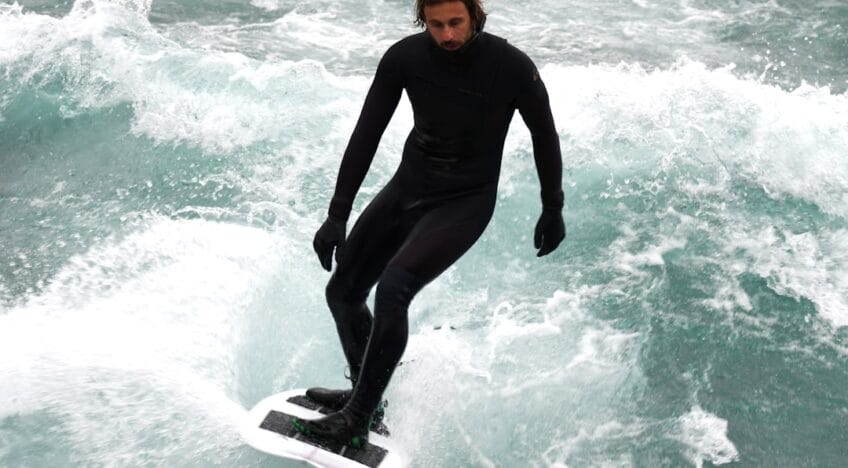
Foil surf is a sport in which the rider moves above the water’s surface, supported by an underwater structure called a hydrofoil. This structure generates enough lift to raise the board, the rider, and all the equipment out of the water during paddling and wave riding.
Those who practice it describe the feeling as flying over the ocean. Without the friction of the board against the water, movement becomes smoother, quieter, and much faster than conventional surfing, even on small, low-energy waves.
In recent years, foil surf has moved beyond a niche pursuit reserved for elite athletes and has found a following among riders of all skill levels. The growth of the sport has followed advances in materials and a relative drop in equipment prices, making it more accessible than ever.
If you want to understand how this technology works, what the risks are, how much it costs, and where to practice in Brazil, you’ll find the answers here.
What Is Foil Surf?
Foil surf is the practice of surfing on a board equipped with a hydrofoil, a type of submerged wing attached to the bottom of the board via a mast. As speed increases, the wing generates lift and raises the entire board above the waterline.
The result is a rider gliding through the air with only the foil in contact with the ocean. This minimal contact drastically reduces drag, allowing higher speeds with far less energy and making it possible to surf swells that would be unrideable on a regular board.
The sport breaks down into different disciplines depending on the source of propulsion: ocean waves, wind, a kite, or even an electric motor. Each variation has its own characteristics, but the hydrofoil principle is always the same.
For those already familiar with conventional surfing, understanding what swells are and how they form goes a long way toward grasping why a foil can harness even the smallest ocean movements.
How Did Foil Surf Begin?
Hydrofoil technology has existed for more than a century, originally used on boats and ferries to improve efficiency on the water. Its application in water sports, however, is far more recent.
The first experiments with foils in surfing took place in Hawaii, where some sailors and surfers began attaching metal structures to boards to push the boundaries of what was possible on the water. For years, the equipment was heavy, dangerous, and far too expensive for anything beyond experimental demonstrations.
The turning point came with advances in composite materials, especially carbon fiber, which made foils lighter, stronger, and more precise. From there, kitesurfing and windfoiling brought the technology to a wider audience of water sports enthusiasts, and foil surf eventually entered the WSL professional circuit and became an Olympic sailing discipline.
Today, foil surf is practiced on beaches around the world and is growing rapidly in Brazil, especially in regions with consistent winds and regular swells.
What Are the Main Components of a Foil Board?
Understanding the equipment is essential for any beginner. A complete foil surf setup consists of four main parts:
- Board: typically smaller and thicker than a regular surfboard, designed to handle the torque generated by the foil and to make the initial paddle easier.
- Mast: the vertical shaft that connects the board to the submerged wing. Mast length directly affects stability and how high the rider flies above the water. Shorter masts are recommended for beginners.
- Fuselage: the horizontal piece that connects the mast to both the front wing and the rear wing, acting as the central axis of the whole system.
- Wings (front wing and rear wing): the structures that generate lift. The larger front wing is responsible for raising the setup out of the water. The smaller rear wing controls stability and direction.
Each of these components can be adjusted or swapped depending on the rider’s skill level and ocean conditions, making foil surf a highly customizable sport.
How Does Foil Surf Work in Practice?
In practice, foil surf starts like any other surf session: the rider paddles toward the wave, positions the board, and stands up. The difference shows up shortly after.
As speed builds, the hydrofoil begins generating lift. The rider feels the board gradually rise until only the foil’s wings remain in the water. From that point on, control is achieved through body weight, with foot pressure used to climb, descend, or change direction.
Balance is the biggest challenge at first. Any overcorrection can cause the foil to breach completely or dive back down, sending the rider into the water. With practice, these adjustments become instinctive and flying above the water starts to feel natural.
Factors like swell quality and wind direction have a big influence on the experience. On days with smooth, consistent swells, the foil tends to perform better than in choppy, unpredictable conditions.
How Does the Foil’s Hydrodynamics Lift the Rider Out of the Water?
The principle is the same one that keeps an airplane in the air: the aerodynamic profile of a wing. In the case of a foil, that wing operates underwater and relies on hydrodynamics rather than aerodynamics, but the physics are equivalent.
As the foil moves, water flows faster over the curved upper surface of the wing than over the flatter lower surface. This difference in speed creates a difference in pressure, and the higher pressure below pushes the wing, and everything connected to it, upward.
The faster the speed, the greater the lift generated. That is why there is a critical speed threshold, known as the foil’s take-off point, at which the board lifts out of the water. This threshold varies depending on wing size and the rider’s weight.
Larger wings generate more lift at lower speeds, making them ideal for beginners and for weak waves. Smaller wings require more speed but offer greater control and agility for maneuvering on bigger waves.
What Types of Foil Surf Are There?
Foil surf branches out into several disciplines, each with its own specific equipment and techniques:
- Surf foil: uses only the energy of ocean waves for propulsion. It is considered the purest and most technical format of the sport.
- Wing foil: the rider holds an inflatable wing that captures the wind and generates propulsion, combining elements of kitesurfing and windsurfing with the hydrofoil.
- Kite foil: uses a large kite connected to the rider to generate power, allowing flight over the water even without waves, relying solely on wind. Understanding the prevailing wind at a location is essential for this discipline.
- Wake foil: the rider is towed by a motorboat until reaching enough speed for the foil to take off, then releases the rope and continues gliding on the wake generated by the boat.
- E-foil: a board with an electric motor attached to the foil, requiring neither wind nor waves. It can be ridden on any calm body of water.
Each discipline has its own audience and use case. Surf foil and wing foil are currently the fastest-growing formats in Brazil.
What Are the Benefits of Foil Surf?
Beyond the unique sensation of flying over the water, foil surf offers concrete benefits for physical fitness and for overall surfing development.
Because it demands constant balance and fine adjustments in body position, foil surf builds proprioception, the ability to sense and control your body in space, far more intensely than conventional surfing. This skill carries over to other athletic activities as well.
Another advantage is the ability to surf in conditions that would normally keep any surfer out of the water. With a foil, small, shapeless, low-energy waves become rideable, significantly expanding practice opportunities throughout the year.
For experienced surfers, foil surf also deepens the understanding of how the ocean behaves. Concepts like how tides work and reading swells take on a whole new practical dimension when viewed through the lens of foiling.
Is Foil Surf Harder Than Traditional Surfing?
Yes, foil surf has a steeper learning curve than traditional surfing, especially in the first few sessions.
In conventional surfing, the main initial challenge is standing up on the board and maintaining balance on a wave. In foil surf, the rider must also learn to control flight height, balancing pressure between the front foot and back foot to avoid losing control of the mast.
Too much weight on the back foot causes the board to rise too high. Weight on the front foot sends it diving back into the water. Finding that balance requires a great deal of sensitivity and takes time to internalize.
That said, people with a background in other balance-based sports such as surfing, skateboarding, or snowboarding tend to progress more quickly. Anyone who already knows how to read waves has a clear advantage when it comes to anticipating the foil’s movements.
What Muscles Does Foil Surf Work?
Foil surf is a complete functional workout. Because it demands constant dynamic balance, it engages muscle groups that many conventional training routines overlook.
The main muscles worked are:
- Core: the abs, obliques, and lower back work continuously to stabilize the torso during flight and course corrections.
- Legs: quadriceps, hamstrings, and calves are activated to control pressure on the foil and absorb changes in elevation.
- Glutes: essential for maintaining surf stance and efficiently transferring power between the front and back foot.
- Shoulders and arms: heavily engaged during paddling and especially in wing foil, where holding the wing for extended periods demands significant muscular endurance.
Given this demanding physical profile, many practitioners combine foil surf with strength training, mobility work, and even martial arts to round out their conditioning.
What Do You Need to Start Foil Surf?
Before buying any equipment, the most important step is to take lessons with an experienced instructor. A foil has rigid, sharp components that, in inexperienced hands, pose a real risk of deep cuts and serious accidents.
With proper guidance, progress is faster and much safer. Many surf schools in coastal areas already offer foil lessons with equipment included, which lets you try it before making an investment.
From a technical standpoint, having a reasonable foundation in conventional surfing is a real advantage. It is not an absolute prerequisite, but anyone who already knows how to stand up on a board and understands wave positioning will advance much more quickly in the first foil sessions.
Getting to know the ocean conditions at your local break also makes a difference. Knowing how to identify wind direction and interpret ocean forecasts are skills every foil rider develops sooner or later.
What Foil Board Should Beginners Choose?
For beginners, the best approach is to start with larger boards and foils with bigger wings, which generate more lift at lower speeds and offer greater stability during the learning process.
The main characteristics to consider are:
- Board volume: higher-volume boards float better, make paddling easier, and give the rider more time to stand up before the foil kicks in.
- Mast length: shorter masts, between 60 and 75 cm, limit flight height and reduce the consequences of a fall. Highly recommended for those just starting out.
- Front wing size: larger wings, above 1,500 cm², are easier to control on small waves and at low speeds.
Just as in traditional surfing, choosing the right beginner board depends heavily on the rider’s weight, height, and fitness level. Consulting a specialist retailer or instructor before buying helps avoid costly mistakes.
What Safety Equipment Is Essential?
Foil surf requires more attention to safety than conventional surfing, primarily because of the risk of contact with the metal parts of the hydrofoil during falls.
The essential protective gear includes:
- Helmet: mandatory in the first sessions and strongly recommended at all times. It protects against impacts with the board and the mast.
- Impact vest: absorbs shocks and provides extra buoyancy, which is especially important for beginners who do not yet have full control of their equipment.
- Neoprene gloves: protect the hands, which are often the first part of the body to make contact with the foil during a fall.
- Long-sleeve rash guard or wetsuit: reduces the risk of surface cuts during the most common types of falls.
- Short leash: keeps the board close without letting the equipment drift away, but should be used carefully to avoid getting caught under the foil.
Never practice foil surf at crowded beaches. A safe distance from other swimmers and surfers must always be maintained.
Where to Practice Foil Surf in Brazil?
Brazil has excellent natural conditions for foil surf. Its extensive coastline, with varying wind patterns, swells, and bottom configurations, offers options for every discipline, from surf foil to wing foil.
The Northeast stands out for its consistent and predictable winds, ideal for kite foil and wing foil. The South has more regular and powerful swells, favoring surf foil. The Southeast offers a varied mix that suits different rider profiles.
Beyond natural conditions, the availability of schools, instructors, and specialty shops is an important factor when deciding where to start. Regions with an established foil surf community provide better infrastructure for those taking their first steps in the sport.
To plan sessions effectively, keeping track of real-time wind conditions is a habit that makes a big difference, especially for wing foil and kite foil riders.
What Are the Best Brazilian Beaches for Foil Surf?
Several regions stand out for their combination of natural conditions and infrastructure for foil surf:
- Cumbuco (CE): one of the kite foil capitals of Brazil. The trade winds blow with regularity and strength for much of the year, creating ideal conditions.
- Jericoacoara (CE): a well-established wind sports destination with a strong foil community and nearby freshwater lagoons, which are great for beginners to practice in more controlled settings.
- Florianópolis (SC): the island’s diverse range of beaches offers spots for both surf foil and wing foil. Lagoa da Conceição is widely used by wing foilers looking for calmer, more controlled conditions to learn.
- Fernando de Noronha (PE): with its crystal-clear waters and clean swells, it is a dream destination for surf foil, despite restricted access and high costs.
- Arraial do Cabo (RJ): consistent winds and calm waters inside the bays make this location attractive for the sport.
Florianópolis deserves special mention for bringing together beaches with very different profiles within a small radius, making it easy to find the right conditions for every skill level.
How Much Does a Complete Foil Surf Kit Cost?
Foil surf is one of the water sports with the highest entry cost. A complete new kit, including board, mast, fuselage, and reasonably quality wings, represents a significant investment, and prices vary considerably depending on brand, materials, and where you buy.
Generally speaking, entry-level setups with adequate materials for beginners tend to cost less than intermediate or high-performance equipment, which can easily be two to three times more expensive for internationally recognized brands.
Protective gear such as a helmet, impact vest, and gloves adds to the initial budget. Instructor-led lessons should also be factored into the financial plan for anyone just starting out.
The good news is that the used equipment market has grown alongside the sport’s popularity, opening up alternatives for those who want to get started without committing to a larger budget.
Is It Worth Buying Used Equipment to Start?
Yes, buying used equipment is a smart strategy for beginners, as long as it is done carefully.
Foil surf has a learning curve that is hard on gear. Dinged boards, scratched masts, and wings with minor damage are common in the second-hand market. That does not mean the equipment is unusable, but it does require careful inspection before buying.
Key things to check when buying used:
- Inspect the mast for cracks or deformations, especially at the base and at the connection point with the fuselage.
- Check that all screws and fittings are secure and free from significant corrosion.
- Test the rigidity of the wings; soft spots or delamination compromise performance and can be dangerous.
- Stick to well-known brands that have replacement parts available in Brazil, making future maintenance easier.
Buying from someone who is upgrading their equipment, rather than someone who quit the sport after a few months, tends to result in better-maintained gear with a more reliable usage history.
Is Foil Surf Safe? What Are the Main Risks?
Foil surf carries real risks that must be understood before any session. That does not mean it is off-limits for most people, but it does require greater awareness than conventional surfing.
The primary danger comes from the hydrofoil itself. The metal or carbon wings are extremely rigid and have edges that can cause deep cuts in a poorly managed fall. Unlike a regular surfboard, which is soft and floats, the foil sinks and can strike the rider with considerable force.
Other relevant risks include collisions with other people, particularly at busy beaches, and fatigue during long sessions, which increases the likelihood of misjudgments when controlling the equipment.
Knowing the local conditions well before entering the water is part of staying safe. Understanding how tides work and how they affect wave behavior and currents at your chosen spot reduces unexpected hazards.
How Can You Reduce the Risks of Foil Surf?
Most serious foil surf accidents could be avoided with simple precautions. Practices that make a real difference include:
- Never practice alone: having someone nearby, whether an instructor, a session partner, or a lifeguard, is essential, especially in the beginning.
- Choose uncrowded spots: a foil requires a much larger safety radius than a regular board. Busy beaches dramatically increase the risk of collisions.
- Always wear full protective gear: a helmet and impact vest are not optional for beginners.
- Learn how to fall correctly: when a fall is unavoidable, the guidance is to push away from the board, fall on your back, and cross your arms over your chest to protect your face and torso.
- Progress patiently: do not attempt sessions on bigger waves or in more demanding conditions before mastering the basics in calm water.
- Keep your equipment in good condition: loose screws and damaged parts increase the risk of failure during use.
With respect for your own limits and for ocean conditions, foil surf becomes an incredible experience and far safer than its reputation as a dangerous sport might suggest.